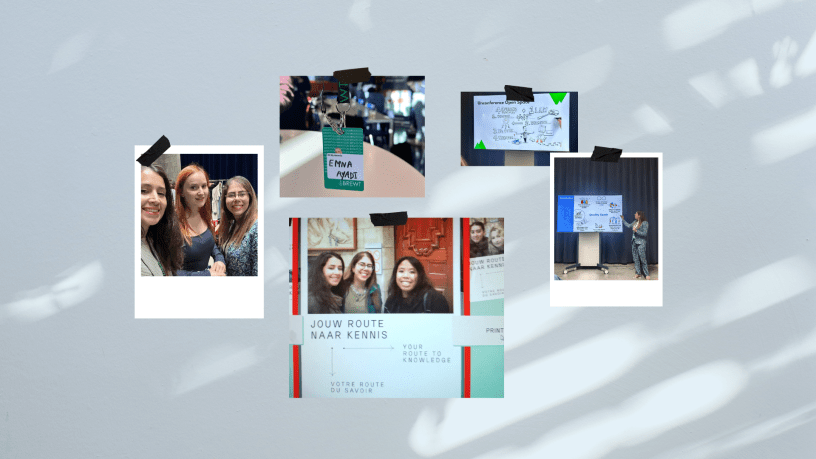
Last Friday, I spent the day at the Brewt Conference in Leuven a gathering of brilliant minds passionate about software quality. But my adventure started long before the first keynote.
Thursday evening, I jumped on a train thinking Louvain = Louvain-la-Neuve. Same name, right? Wrong. Two extra trains later, I finally arrived. Hours lost, lesson learned: Assumptions can really mess up your plans in real life and in testing.
As a tester, this hit home. We often assume things because they “look” right. But clarity matters. Asking about small details matters. In software and in life, it saves time, effort, and frustration.
The Conference: A Day of Insights
After my unexpected “exploratory testing” of Belgian railways, Friday was all about exploring the evolving world of software quality. Here are the highlights:
Kristof Van Kriekingen kicked off the day and introduced the unconference concept. It was refreshing to see a mix of conference and unconference formats in one day. Participants had the freedom to choose from three rooms and dive into discussions on topics that mattered most to them.

I had the chance to pair with Cynthia Maes Maes to explore how we can learn using AI and it was such a creative experience! Her approach was incredibly fun and added a fresh perspective to my #PromptedToLearn framework.
Cynthia uses a music generator that creates songs about testing topics using AI. Listening to these concepts as lyrics makes them so much easier to remember. It’s a brilliant way to turn learning into something engaging and memorable.

✅ Joep Schuurkes – Testing: Harder, Better, Faster, Stronger?
Joep Schuurkes took us on a journey through the past 20 years of testing. From isolated test teams with weeks to prepare, to today’s Agile/DevOps reality where speed and versatility rule. Key reflections:

- Testing is no longer a silo it’s embedded in the team.
- Skills must expand beyond scripts to strategy and collaboration.
- The future of testing is unevenly distributed; adaptability is your superpower.

✅ Dries Wouters – Opinionated Test Automation: Principles for Building Reliable and Maintainable Unit Tests.
This session was a big addition to my technical background. I don’t use these patterns daily, but they opened my eyes to what makes a solid unit test:
- Protects against regression
- Resistant to refactoring
- Fast feedback for developers
- Maintainable

Patterns and principles that stood out by Dries Wouters
- AAA Pattern: Arrange → Act → Assert
- Loosely Coupled Tests: Link tests to business requirements, not implementation details. Each test should tell a meaningful story to a domain expert.
- Test Doubles: Dummy, stub, spy, mock, fake tools to improve testability and maintainability. (“mocks” for simplicity.)
- Solitary vs Sociable Testing: Focus on what you own; introduce mocks for unmanaged dependencies.
- Test Fixtures & Builders: Reuse setup, reduce boilerplate, make tests easier to read and maintain.
Big takeaway: Avoid “shitty tests” by designing for clarity and resilience. Couple tests to observable behavior, not fragile implementation details.

✅ Sepp Van Cauwenbergh – Self-Healing is a Lie, but Good Design Isn’t
Test automation isn’t about building the biggest, most complex framework. It’s about building with purpose.

Sepp Van Cauwenbergh busted the myth of “self-healing” tests. Magic fixes don’t exist—solid engineering does. Key lessons:
- Overengineering kills scalability; simplicity wins.
- Resilience comes from intentional design across all layers: requirements, traceability, development practices, automation, observability.
- AI in low-code platforms promises self-healing, but in reality, it’s a bundle of resilience patterns not magic.
- Automating quality ≠ automating evidence.

✅ Koen Van Belle – Becoming a Full-Stack Tester
Koen Van Belle explored the concept of a full-stack tester someone who can contribute across all layers of technology. Key lessons:
- Testing is evolving; so should we.
- Expand your skills beyond manual and automation.
- Career growth lies in versatility and continuous learning.

✅ My Journey Through the Hidden Realities of Quality Coaching
I shared my own journey about quality coaching :

- Transitioning from Test Leader to Quality Coach during agile transformation.
- Challenges like unclear scope, exploding agendas, and raising awareness about the role.
Lessons learned:
- Create your own agenda and stay available.
- Understand expectations from both management and teams.
- Collaborate with all change agents.
- Change takes time visualize, measure, adapt.
And yes, I showed my toolbox:
- Coaching models (SOON Funnel, open-ended questions).
- Team health checks for continuous improvement.
- The Prompting Machine a creative way to use GenAI for coaching and brainstorming.

Final Thoughts
Challenge accepted and a big thanks to Imen NAGUEZ for inspiring me to share this blog!
What made Brewt truly special wasn’t just the talks, but the learning, networking, and the unconference sessions. Having the freedom to choose topics and join discussions in three different rooms created space for authentic conversations and unexpected insights.
I also had the chance to reconnect with amazing friends Nesrine TORKHANI who traveled all the way from Lille and Laura Ravoi who wanted to attend testing conference for the first time, she came from Marseille. I met also lot of other testing friends Patrick van Enkhuijzen Frederick Vandenbosch René van Veldhuijzen and beyond ..
These moments remind me that conferences aren’t only about knowledge they’re about people, ideas, and collaboration.


